By Our Detective
The Ugandan government has announced sweeping emergency measures aimed at preventing the spread of Ebola Virus Disease (EVD) following a fresh outbreak in the Democratic Republic of Congo (DRC) and the confirmation of imported cases within Uganda.
The measures were adopted during a high-level meeting of the National Task Force on Ebola Virus Disease convened on Thursday by Vice President Jessica Alupo.
Among the major resolutions is the temporary suspension of all flights between Uganda and the DRC, which will take effect within the next 48 hours as authorities move to contain possible cross-border transmission.
The government has also suspended cross-border public transport between Uganda and the DRC for four weeks, including public passenger ferry services operating along the River Semuliki. However, transportation of cargo, food supplies, and other essential goods will continue uninterrupted.
According to the Ministry of Health, the restrictions are temporary and are intended to strengthen national preparedness while surveillance and containment efforts are intensified.
Uganda has so far confirmed two imported Ebola cases involving Congolese nationals who reportedly entered the country after exposure to the virus in the DRC.
“One fatality has been recorded, and one patient remains under care. She is recovering steadily and is currently out of danger,” the Ministry of Health announced on Thursday.
The ministry further revealed that the surviving patient tested negative for Ebola on Monday, May 18, and a second repeat test conducted on Wednesday, May 20, also returned negative results. Officials said she is currently being managed for underlying health conditions.
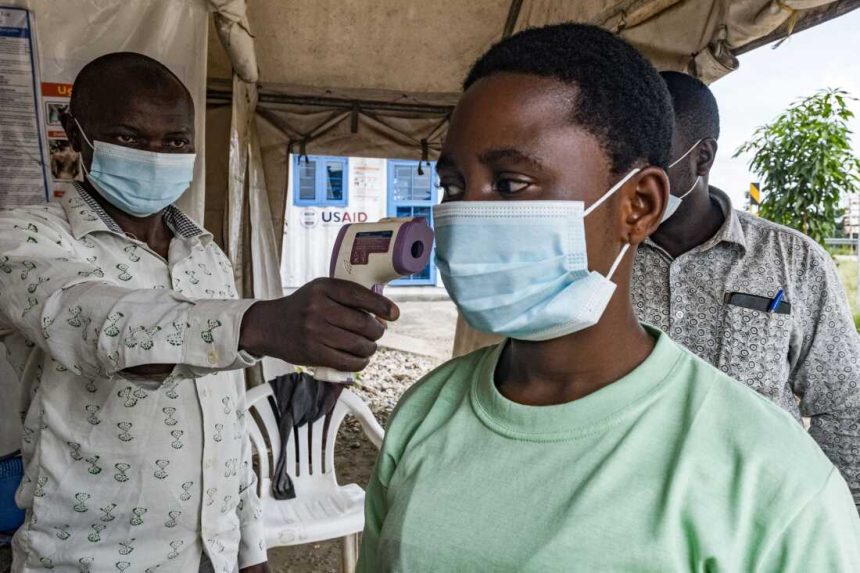
Health authorities are now enhancing screening, testing, and treatment capacity along the Uganda-DRC border based on ongoing risk assessments. The government is also reinforcing border security patrols along porous crossing points to minimise illegal movement between the two countries.
As part of the nationwide response, all weekly markets in border sub-counties within high-risk districts have been suspended for four weeks. Cultural celebrations and commemorative events that attract large gatherings along the Uganda-DRC border have also been halted temporarily.
In addition, the government announced that all movement from the DRC into Uganda will now be limited to gazetted and officially designated border crossing points.
The measures were formally communicated by Health Ministry Permanent Secretary Diana Atwine, who urged the public to remain calm but vigilant.
Dr Atwine called on Ugandans to strictly follow all health guidelines issued by the Ministry of Health and to immediately report any suspected Ebola cases to the nearest health facility.
She added that the government has intensified nationwide public awareness campaigns focusing on infection prevention, control measures, and compliance with standard operating procedures for public gatherings.
The sensitisation campaign is being conducted through radio stations, television platforms, social media, cultural institutions, religious leaders, and local government structures across the country.
The Ministry of Health also confirmed that preventive measures are being reinforced in schools, prisons, hotels, places of worship, and non-weekly markets across border districts considered high-risk.
Authorities have additionally strengthened death reporting and surveillance systems, particularly in districts bordering the DRC and within the Kampala Metropolitan Area.
Officials say Uganda’s rapid response strategy is intended to prevent a repeat of previous outbreaks by ensuring early detection, aggressive surveillance, contact tracing, and swift isolation of suspected cases.
“These measures are designed to minimize cross-border transmission as our medical teams intensify surveillance, contact tracing, and overall emergency preparedness efforts,” the Ministry stated.
Health officials said the situation will continue to be monitored closely and restrictions will only be lifted once public health experts determine that the risk has significantly reduced.