By Our Reporter
Namayingo: In what is fast morphing into a brazen test of Uganda’s rule of law, CN Sugar Limited has resumed construction of its controversial sugar factory in Kifuyo Village, Bukooli South Constituency, Namayingo District—despite a landmark High Court ruling that declared its licence illegal, ordered it to halt operations, and directed removal of mills erected in prohibited zones.
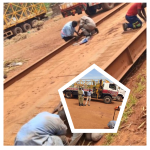
Our investigations reveal that the factory is now “about 90% complete,” with heavy machinery already installed on site. This, even after Justice Dr. Douglas Singiza Karekona categorically found CN’s operations unlawful and ordered the immediate removal of illegally established mills.
The Genesis Of The Suit
The legal battle was triggered by the Uganda Sugar Manufacturers Association (USMA), whose membership includes industry giants such as Kakira Sugar Works, Kinyara Sugar Works, SCOUL, Bugiri Sugar Ltd and Sango Bay Estates.
USMA dragged the Attorney General, the Minister of Trade, Industry and Cooperatives (MTIC), CN Sugar Ltd and Shakti Sugar Ltd to court in Miscellaneous Cause No. 195 of 2024, challenging the issuance of so-called “Letters of No Objection” (LONOs) used by CN to establish a sugar mill within a 25-kilometre radius of existing factories.
The association argued that after the coming into force of the Sugar Act, only the Uganda Sugar Board (USB) had the statutory mandate to license sugar mills. However, the Minister had failed to operationalise the Board and instead permitted new entrants using administrative letters disguised as licences.
The Court’s Core Findings
Justice Singiza’s 20th, January 2025 ruling was emphatic.
On Licensing Authority
The Court held that Section 7(1)(j) of the Sugar Act is explicit: only the Uganda Sugar Board can license sugar mills.
“It is the final determination of this court that, in the absence of a properly constituted USB, neither the MTIC nor UIA could validly issue any sugar and jaggery mills licences… The licences granted to CN and Shakti… are illegal and of no consequence.”
On The Failure To Establish The Uganda Sugar Board
The Judge ruled that the Minister’s failure to operationalise the USB amounted to a breach of statutory duty: “It is thus the firm determination of this court that the failure to put the USB in place was a breach of a statutory duty by the MTIC… manifestly illegal.”
On The 25km Zoning Policy
The Court examined the National Sugar Policy 2010 and reaffirmed the 25-kilometre zoning restriction: “The undeniable fact is that the policy prohibits the grant of any sugar mill licences within the prohibited spaces.”
Evidence before court showed that CN’s factory sits within approximately 19 kilometres of an existing mill—squarely in breach of policy.
On Letters Of No Objection (LONOs)
In one of the most damning passages, the Court adopted the classic legal principle:
“A public official ‘cannot put something on nothing and expect it to stay. It will collapse.’ In this case, LONOs were legally nothing and must collapse because they were unreasonably and wrongly used in the place of lawful licences from the USB.”
Orders Issued
Justice Singiza did not mince words in the reliefs granted:
• Certiorari cancelling all LONOs issued to CN.
• An order halting all sugar milling operations until properly licensed.
• A restraining order against further illegal construction. • Mandamus compelling the Minister to constitute the USB within three months.
• An order directing the Inspector General of Police to remove CN’s mills from prohibited zones within 14 days. In effect, the factory was to stop and be removed.
The Stay Of Execution And The Political Turn
CN subsequently sought and obtained a stay of execution pending appeal. That legal shield, however, appears to have been transformed into a political campaign.
Our Spy sources on ground in Namayingo, allege that instead of relocating and applying afresh to a properly constituted regulatory authority, CN has mobilised political ‘Dikuulas’, casual workers, friends and inlaws to legitimise what the court already declared illegal, by staging protestor carrying placards calling on Government to arm twist the law and legitimise CN illegalities.
“They have decided to use politicians, RDC’s office and other local politicians to get what they want other than the law… Some politicians during campaigns wanted to bring the President there as an endorsement so they could use the visit to manipulate Justice Singiza’s January 2024 court ruling. But the President dodged them,” our source disclosed.
Is CN Above The Law?

Three uncomfortable questions now confront the country:
- Was the 25km policy amended? There is no publicly gazetted amendment to the Sugar Policy removing the zoning restriction.
- Has Parliament amended the Sugar Act to permit ministerial licensing? No such amendment has been operationalised.
- Can political endorsement override a subsisting High Court judgment? In law, it cannot.
A renowned city law jaganat jotted on WhatsApp chat with our Spy thus; “While a stay of execution suspends enforcement pending appeal, it does not convert an illegal licence into a lawful one. The substantive findings of illegality remain unless overturned by a higher court”.
The Bigger Picture: Regulatory Capture?
According to analysts, this case exposes a deeper governance crisis, CN scenario may just be an eye opener for stake holders to realize the bigger picture.
The Court found that the Minister’s refusal to constitute the USB created a regulatory vacuum, which was then exploited through administrative letters masquerading as licences.
The judge rejected reliance on “concurrent powers” and held that where a specific law exists, general powers cannot override it.
Yet today, heavy machinery stands in Kifuyo. Construction is nearing completion. And political actors are reportedly being courted to sanitise what the court termed “illegal and of no consequence.”
If investors can proceed on the basis of “90% completion” and sunk costs, does illegality become curable by expenditure?
For now, one reality remains stark: a High Court declared the factory illegal, cancelled its permissions, and ordered its removal. Yet construction continues!
In Kifuyo village, the steel structures rising against the skyline are no longer just a factory. They are a live referendum on whether Uganda is governed by law—or by leverage. Watch the space….